
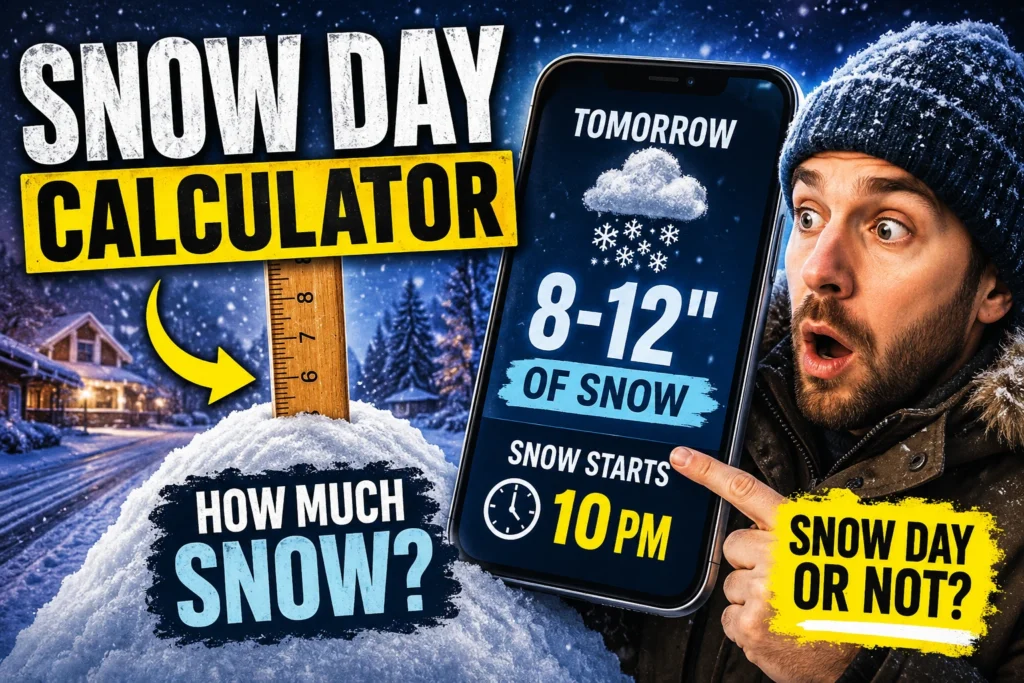
Winter weather can change quickly, and when a storm is in the forecast, students, parents, and teachers often ask the same questions: how much snow are we getting tomorrow, what time is the snow starting, and could schools close because of the weather? These questions become even more important when forecasts show accumulating snow, freezing temperatures, or the possibility of dangerous road conditions.
A Snow Day Calculator USA helps estimate the likelihood of school cancellations by analyzing weather forecasts, snowfall totals, temperature, location, and historical closure patterns. While no prediction tool can guarantee that schools will close, a Snow Day Calculator USA provides a useful way to understand how winter weather may affect the next school day.
Across the United States, millions of families check snowfall predictions, school closure updates, and weather alerts before making plans. Whether you’re monitoring a developing winter storm, tracking a potential snow day, or simply wondering if travel conditions will be safe, understanding the forecast can help you prepare ahead of time.
How Much Snow Are We Getting Tomorrow? Understanding Snowfall Forecasts
One of the most common winter weather questions is: how much snow are we getting tomorrow? The answer depends on several factors, including storm intensity, temperature profiles, moisture availability, and local geography.
Meteorologists use advanced forecasting models to estimate snowfall amounts days before a storm arrives. These models analyze atmospheric conditions and continuously update as new weather data becomes available. Because weather systems can shift unexpectedly, snowfall totals often change as the storm approaches.
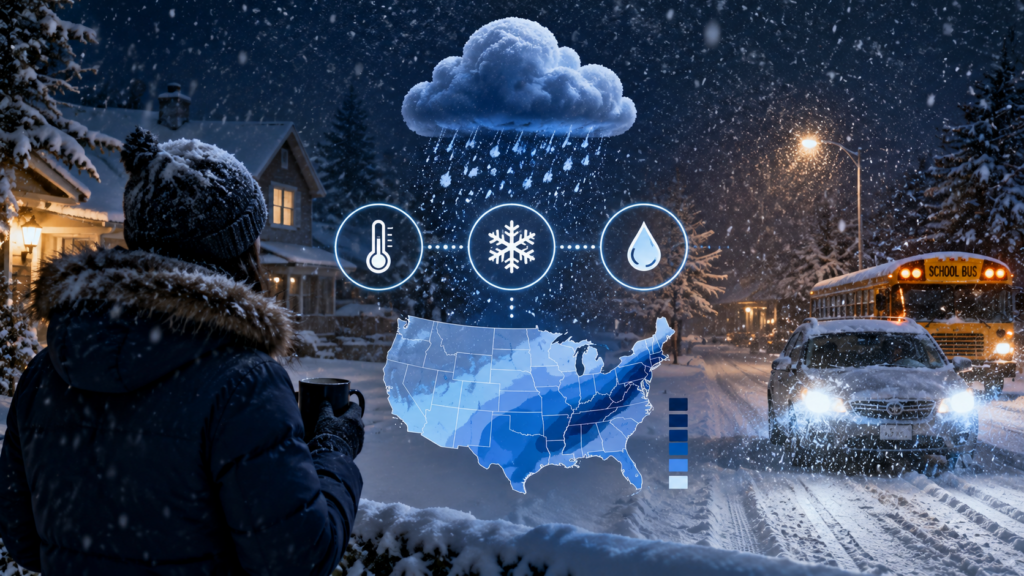
In many regions of the United States, even a few inches of snow can create hazardous driving conditions and increase the chances of delayed openings or school closures. When forecasts predict heavier accumulations, communities often begin preparing for possible disruptions well in advance.
How Snow Day Calculator USA Uses Forecast Data
A snow day calculator evaluates multiple weather variables rather than focusing only on snowfall totals. Forecast snowfall, road conditions, wind speed, temperatures, and local school closure trends may all contribute to the prediction process.
For example, six inches of snow falling overnight may create a higher probability of a school closure than the same amount falling during the afternoon after classes have ended. Timing often matters just as much as accumulation.
Why Forecast Totals Can Change
Weather models update several times each day. As a result, snowfall predictions may increase or decrease depending on the latest atmospheric data. This is why many families monitor forecasts repeatedly before a major winter storm arrives.
Checking an extended forecast can provide a broader picture of upcoming weather patterns, helping families anticipate potential snow events several days in advance.
What Time Is the Snow Starting? Why Timing Matters for School Closures
When winter weather is approaching, many families focus not only on snowfall totals but also on what time is the snow starting. The timing of a storm can significantly impact whether schools remain open, operate on a delayed schedule, or close entirely.
School administrators often monitor overnight weather conditions closely. Snow that begins during the late evening and continues through the early morning commute generally creates greater concerns than snow arriving after students have already reached school. Even moderate snowfall can lead to dangerous road conditions if it occurs during peak travel hours.
Modern forecasting tools allow users to monitor expected start times, snowfall rates, and storm progression. Many parents use a snow day tracker to follow developing weather systems and stay informed as forecasts are updated throughout the day.
Using Weather Models to Estimate Start Times
Meteorologists rely on multiple forecasting models to predict when precipitation will begin. These models analyze atmospheric moisture, temperature changes, wind patterns, and storm movement to estimate the arrival of snow.
Because weather systems can evolve rapidly, start times may shift by several hours as new data becomes available. This is why weather forecasts are updated frequently leading up to a winter event. Reviewing radar updates alongside a winter storm map can provide a more accurate picture of how a storm is developing and when snowfall may reach your area.
Many families also compare forecasts from several sources rather than relying on a single prediction. Tools such as an accuweather snow day calculator USA may help users better understand how forecast conditions could affect school operations.
How Snowfall Timing Influences Snow Day Predictions
Timing is one of the most important factors used in Snow Day Calculator prediction models. A storm that drops several inches of snow overnight can create significant challenges for road crews and school transportation departments before morning classes begin.
In contrast, if snowfall starts later in the day after roads have already been treated and buses have completed their routes, schools may be less likely to close. This is why a Snow Day Calculator USA evaluates both snowfall amounts and expected timing when estimating closure probabilities.
When forecasts indicate that snow will begin before dawn and continue through the morning commute, the likelihood of delays or cancellations often increases. Monitoring forecast updates regularly helps families stay prepared for changing weather conditions.
Is There Going to Be a Snow Day Tomorrow? Key Factors Schools Consider
As winter weather approaches, one question quickly becomes the focus of students and parents alike: is there going to be a snow day tomorrow? While weather forecasts provide valuable information, the final decision to close schools involves much more than simply measuring snowfall totals.
School districts evaluate road conditions, expected snowfall rates, temperatures, visibility, ice accumulation, and transportation safety before making closure decisions. Even when forecasts predict several inches of snow, schools may remain open if roads can be cleared efficiently before students begin traveling.
Many families use a snow day calculator USA to estimate closure chances ahead of official announcements. These tools combine forecast data with historical weather patterns to provide an educated prediction of whether schools may close due to winter weather.
How Prediction Tools Estimate Closure Probabilities
Modern prediction systems analyze a variety of weather-related factors. Snow accumulation remains important, but other variables can be equally influential. Extremely low temperatures, strong winds, freezing rain, and poor visibility often increase the likelihood of closures.
A no school calculator typically uses local forecast information along with historical district behavior to estimate possible outcomes. Some tools also function as a school cancellation predictor by comparing current weather conditions with previous storms that resulted in delays or cancellations.
Many users frequently ask, “what is the percentage of a snow day tomorrow?” While these percentages are useful indicators, they should be viewed as estimates rather than guarantees. School administrators ultimately make decisions based on real-time conditions and safety assessments.
Why Local Conditions Matter More Than Snowfall Totals
Two communities can receive the same amount of snow and experience completely different outcomes. Urban areas with extensive snow-removal resources may remain open, while rural districts facing difficult road conditions may decide to cancel classes.
This is why questions such as will we get a snow day tomorrow cannot be answered solely by looking at snowfall forecasts. A Snow Day Calculator USA considers factors beyond expected snowfall, including transportation routes, bus availability, road treatment operations, and local weather impacts.
Many prediction tools generate numerical scores to estimate closure likelihood. Some Snow Day Calculator systems may produce values such as 260 or similar weather-based calculations depending on their forecasting models and internal scoring methods. These figures help users compare weather scenarios but should always be interpreted alongside official forecasts and district communications.
For the most accurate expectations, families should combine prediction tools, weather forecasts, and local announcements when evaluating the possibility of a snow day.
Will There Be a Snow Day Tomorrow? Understanding School Cancellation Decisions
When winter weather forecasts become more serious, families often move beyond predictions and begin asking a more direct question: will there be a snow day tomorrow? Although forecasting tools can provide useful guidance, official decisions are made by school districts after carefully evaluating local conditions.
Superintendents and transportation officials typically begin reviewing weather data well before the morning commute. Their goal is to determine whether students, teachers, and bus drivers can travel safely. Snowfall accumulation, icy roads, wind chills, visibility, and the condition of secondary roads all contribute to the decision-making process.
While many people rely on a snow calculator for quick estimates, school officials use a broader range of information, including reports from road crews, emergency management agencies, and local weather services. This comprehensive approach helps ensure that safety remains the top priority.
How a Snow Day Calculator USA Compares Predictions to Real-World Conditions
A snow day calculator can be a valuable planning tool because it helps families understand the potential impact of an approaching storm. However, prediction tools cannot account for every local factor that school districts evaluate before announcing closures.
For example, two neighboring districts may experience the same weather event but reach different decisions based on road infrastructure, snow-removal resources, and transportation routes. This is one reason prediction percentages sometimes differ from final outcomes.
People frequently ask, “will it be a snow day tomorrow?” or “is there a chance school will be cancelled tomorrow?” The answer often depends on how conditions develop overnight. A forecast that appears manageable during the evening can change significantly by early morning if snowfall rates increase or temperatures drop unexpectedly.
Where to Find Reliable Closure Information
Once school officials make a decision, announcements are typically shared through district websites, local news stations, mobile alerts, and social media channels. Families should always verify information using official school communications rather than relying solely on rumors or unofficial online discussions.
Many parents also search for official school closings lists to confirm whether classes have been canceled. While a Snow Day Calculator USA can provide early estimates, these reports are updated throughout the morning and often include delays, early dismissals, and transportation adjustments.
Students commonly check what schools are off during major winter storms, especially when neighboring districts begin announcing closures. In larger weather events, reports may show numerous schools closed across an entire region as hazardous travel conditions spread.
Although a Snow Day Calculator USA can provide helpful insights and weather-based predictions, the most dependable source of information will always be official announcements from local school districts and trusted weather authorities.
How to Track School Closures, Delays, and Winter Weather Updates
When a winter storm is approaching, staying informed can make a significant difference in planning for the next day. Whether you’re a student hoping for a day off or a parent preparing transportation alternatives, knowing where to find accurate information is essential.
Many families monitor snow closings and delays throughout the evening and early morning hours. School districts often release updates as weather conditions evolve, especially when forecast confidence increases overnight. Because winter storms can change direction or intensity unexpectedly, closure decisions may not be finalized until just a few hours before classes are scheduled to begin.
One of the most effective ways to stay informed is by using a snow day tracker alongside trusted weather forecasts. Tracking forecast updates, road conditions, and local announcements can help families anticipate possible disruptions before official decisions are made.
Using Weather Maps and Forecast Tools Effectively
Weather maps provide valuable insight into developing winter systems. A detailed winter storm map can show snowfall zones, precipitation timing, storm movement, and areas expected to experience the greatest impacts.
Families often ask questions such as how many inches of snow on thursday when preparing for upcoming weather events. Forecast models can provide estimates several days in advance, but snowfall totals should always be viewed as projections rather than guarantees. Small shifts in temperature or storm track can significantly affect final accumulations.
Reviewing forecast updates regularly allows users to compare changing conditions and better understand how a storm may affect their local area.
Monitoring School Announcements and Closure Reports
In addition to weather forecasts, official school communication channels remain the most reliable source of closure information. District websites, emergency notification systems, local television stations, and mobile alerts often publish updates as soon as decisions are finalized.
Many parents search for official school closings reports to verify announcements quickly. While a Snow Day Calculator USA can help estimate the likelihood of cancellations, these reports usually include confirmed closures, delayed openings, transportation changes, and other important updates affecting students and staff.
During widespread winter storms, families frequently check what schools are off across nearby districts to understand regional impacts. In severe weather events, numerous schools closed notices may appear within a short period as conditions deteriorate across multiple communities.
Another common question during extended winter forecasts is: will schools be closed on monday? While long-range predictions and a Snow Day Calculator USA can provide helpful guidance, closure decisions are generally based on the most recent forecast data and actual road conditions. As a result, families should continue monitoring updates as the weather event approaches.
By combining forecast tools, weather maps, local news coverage, and official school communications, families can stay informed and make better decisions during winter weather events.
Conclusion
Winter weather can be unpredictable, which is why many families closely monitor forecasts, snowfall totals, and school announcements before making plans. Questions such as how much snow are we getting tomorrow, will there be a snow day tomorrow, and will schools be closed on monday become increasingly common whenever a significant storm is expected.
While prediction tools can never guarantee an outcome, they provide valuable insight into potential weather impacts. Whether you’re using a snow calculator, reviewing an extended forecast, or following local weather alerts, staying informed can help you prepare for changing conditions.
The best approach is to combine forecast information, real-time weather updates, school announcements, and prediction tools. By doing so, families can make informed decisions and avoid last-minute surprises when winter weather arrives.