
If you’ve ever stood at the window at 6 a.m., watching snow pile up and refreshing your district’s website, you already know the frustrating truth: there’s no magic number. A lot of parents assume there’s some official rulebook like “3 inches means an automatic closure” but that’s not how it actually works. School closures are judged storm by storm, road by road, and district by district, which is exactly why the same forecast can shut down one town and barely register in the next.
This guide breaks down how much snow cancels school, the real factors behind those decisions, typical thresholds across different regions, and how tools like a snow day calculator try to predict what your school will do so you’re not just guessing along with everyone else on the group chat.
There’s No National Snow Day Threshold: It’s Local
There’s no federal or even statewide rule dictating how much snow cancels school. Each district, sometimes even individual schools within a district, makes its own call based on local road conditions, bus routes, and staff availability. A superintendent in Minneapolis and one in Nashville aren’t working off the same playbook, even if their local forecasts show identical snowfall totals.
Why the Same Snowfall Means Different Things in Different States
The real driver isn’t the snow itself it’s infrastructure. Districts in snow-heavy states own large fleets of plows and keep road crews on standby all winter, so a few inches barely disrupts anything. Districts in areas that see snow only once or twice a year don’t have that equipment or experience, so even a light dusting can make roads genuinely unsafe for buses. That’s why “how much snow cancels school” doesn’t have one answer it has dozens, depending entirely on where you live.
Typical Inches-of-Snow Thresholds by Region
While there’s no official rulebook, patterns do emerge once you look at how different regions actually respond to snowfall. These aren’t hard rules just general tendencies based on how prepared each area is for winter weather.
US Snowbelt vs. Southern States vs. Coastal Areas
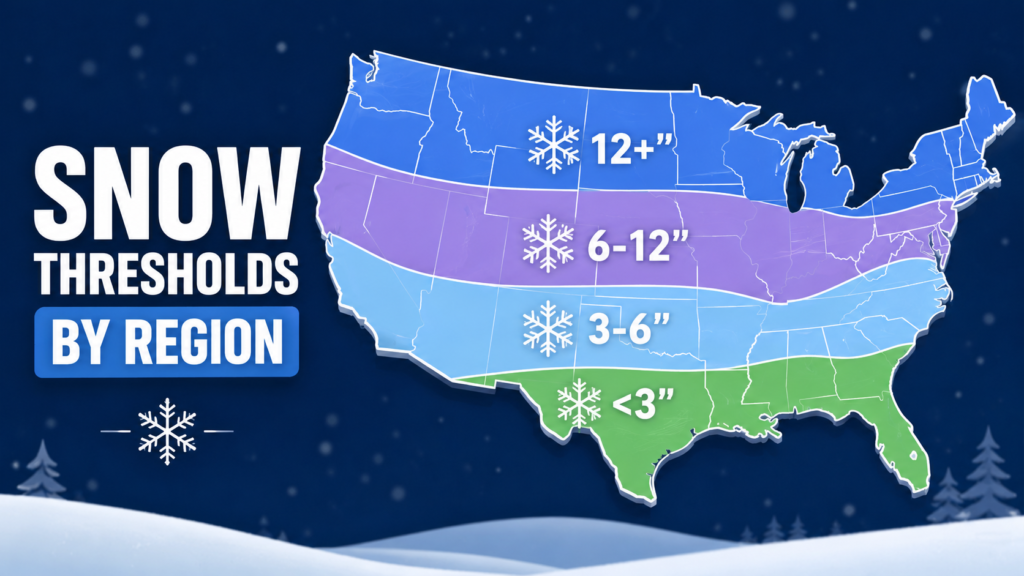
In snowbelt states like Minnesota, Michigan, and upstate New York, schools often stay open through 6–8 inches of snow, since plows clear main roads quickly and buses are equipped for winter driving. Delays are more common than full closures unless a storm brings extreme wind or whiteout conditions.
In the mid-Atlantic and Midwest think Ohio, Pennsylvania, or Illinois the tipping point tends to land somewhere around 4–6 inches, especially if snow is falling during morning commute hours rather than overnight. In southern states like Georgia, Texas, or the Carolinas, even 1–2 inches can shut schools down entirely. These districts typically don’t own enough plows or salt trucks to treat roads quickly, and many drivers have little experience navigating snow or ice, which makes the safety math very different.
Coastal and mountain regions add another layer of unpredictability elevation changes mean one side of a district can be clear while the other is buried, which is often why some schools delay instead of closing outright. This regional variation is really the heart of how much snow cancels school: it’s less about the number and more about what that number means for a specific district’s roads and equipment.
Factors That Matter More Than Inches
Snowfall totals get all the attention, but they’re often not the deciding factor. Superintendents and transportation directors are usually weighing several conditions at once, and snow depth is just one piece of that puzzle.
Timing matters more than volume. Two inches falling steadily between 6 and 8 a.m., right as buses are running their routes, is far more disruptive than six inches that falls overnight and gets plowed before sunrise.
Ice changes everything. A thin layer of ice on roads or sidewalks is often more dangerous than several inches of powder. Freezing rain, black ice, and refreezing slush are common reasons schools close even when the snowfall total looks unimpressive on paper.
Wind chill and visibility play a role too. Extreme cold can make waiting at a bus stop genuinely unsafe, and low visibility from blowing snow can make rural or highway routes risky even if accumulation is minor.
Road crew capacity and bus fleet readiness are the quiet factors behind most decisions. A district can technically handle the snow itself, but if plows can’t clear neighborhood roads in time for a 7 a.m. pickup, that’s often enough to call a delay or closure.
Taken together, these factors explain why forecasts alone rarely tell the full story and why two districts a few miles apart can make completely different calls on the same morning.
How Much Snow Cancels School? What Calculators and Predictors Actually Do
If you’ve searched for a snow day calculator or snow day predictor before a storm, you’ve probably noticed they’re everywhere but few people understand what’s actually happening behind the scenes.
Most of these tools work by combining historical closure data with your local forecast to estimate how much snow cancels school for your specific district. They look at how that district has responded to similar snowfall, temperature, and timing in past storms, then use that pattern to estimate the odds of a closure or delay this time around. Some also factor in day-of-week trends, since districts are sometimes more reluctant to cancel school right before a holiday break, and more willing to call it on a Friday.
How Accurate Are They, Really?
These tools are genuinely useful as a rough guide, but they’re not making the decision your superintendent is. A predictor can tell you that a district has historically closed 80% of the time under similar conditions, but it can’t account for a last-minute change in the forecast, a broken-down plow truck, or a superintendent who’s simply more cautious than their predecessor. Think of a snow day calculator as a weather-informed guess based on patterns, not a guarantee. It’s most reliable in districts with consistent, predictable closure habits and least reliable in areas where decisions swing based on judgment calls rather than firm thresholds.
Canada and UK: Different Systems, Different Snow Tolerance
Snow day decisions look quite different once you cross the border or the Atlantic.
In Canada, winter weather is simply a bigger part of daily life across most provinces, so the threshold for closing school is generally higher than in the US. Districts in Ontario, Quebec, or the Prairies are built for heavy snow plows, salted roads, and winter tires are standard so schools often stay open through storms that would shut down an American district several states south. Closures in Canada tend to be driven more by extreme cold warnings, blizzard conditions, or whiteout visibility than by snow depth alone.
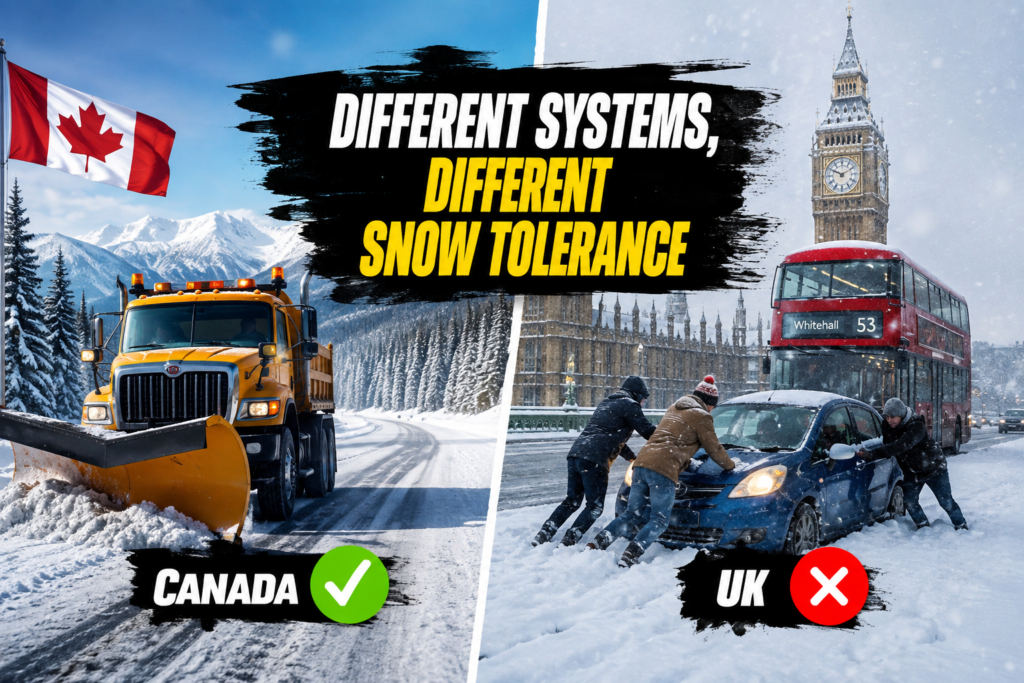
The UK sits at the opposite end of the spectrum. Because snow is relatively rare and road infrastructure isn’t built around it, even 1–2 inches can be enough to close schools, especially in areas without proper gritting equipment. Icy pavements and hazardous walking routes for pupils are often a bigger concern than the snowfall itself, and many UK schools will close preemptively based on a forecast rather than waiting to see how much actually falls. The takeaway is the same one that applies across regions: snow tolerance is really a reflection of how prepared the local infrastructure is, not a fixed amount of snowfall.
Who Actually Decides: and How Parents Can Get a Head Start
The final call almost always comes from the superintendent, often working closely with the district’s transportation director. Before sunrise on a potential snow day, transportation staff typically drive key routes themselves checking road conditions, parking lots, and problem areas like hills or unplowed side streets and report back so the superintendent can make an informed decision, usually by 5 or 6 a.m.
For parents trying to get ahead of the announcement, a few habits help more than refreshing social media:
- Sign up for district alerts (text, email, or app notifications) these almost always go out before it hits the news.
- Check local news and radio, which many districts still use as a primary announcement channel, especially in smaller towns.
- Use a snow day predictor as a planning tool, not a certainty it’s great for deciding whether to set an alarm early, not for canceling childcare the night before.
- Watch the timing of the storm, not just the forecasted inches. A storm arriving during the morning commute raises the odds of a delay or closure far more than the same snowfall overnight.
At the end of the day, how much snow cancels school really comes down to a mix of local infrastructure, timing, and safety judgment not a fixed number anyone can point to. The best approach is knowing your own district’s tendencies, keeping an eye on the forecast’s timing (not just its total), and treating any snow day calculator as a helpful guess rather than the final word.
FAQ
Is there an official amount of snow that cancels school?
No. There’s no national or state-mandated threshold. Each district decides based on local road conditions, equipment, and safety judgment.
How many inches of snow usually cancels school in the US?
It varies widely by region snowbelt states may stay open through 6–8 inches, while southern states can close for just 1–2 inches due to limited snow-clearing infrastructure.
Do snow day calculators actually work?
They’re a helpful guide based on historical closure patterns and forecasts, but they can’t guarantee a closure the final decision always rests with the superintendent.
Does ice affect the decision more than snow?
Often, yes. Icy roads and sidewalks are frequently more dangerous than several inches of snow, and are a common reason for closures even when snowfall totals look modest.
What time do schools usually announce a snow day?
Most districts announce by 5–6 a.m., after transportation staff have checked road conditions overnight or early that morning.